
- Sustainability
- Our Approach
- Materiality
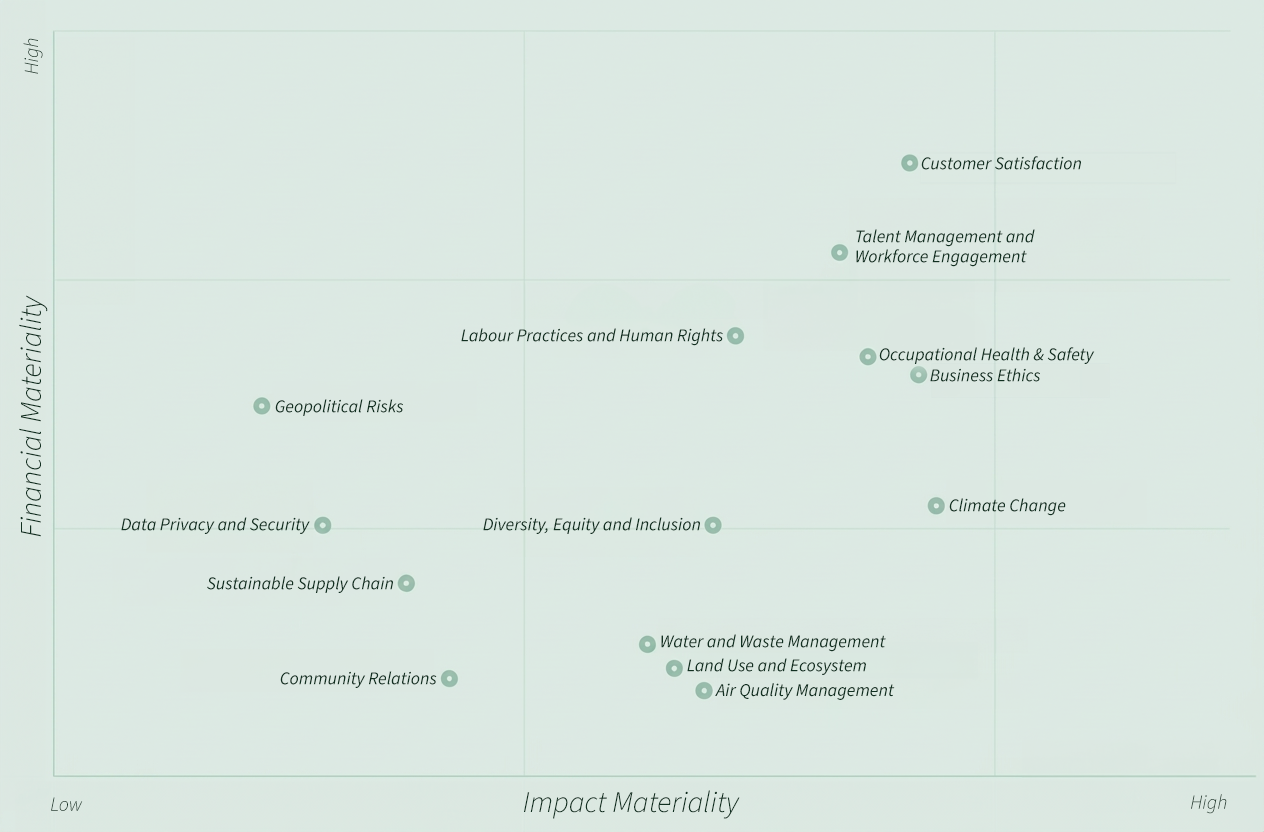
Double Materiality brings both perspectives together to determine the sustainability matters most relevant to L&T
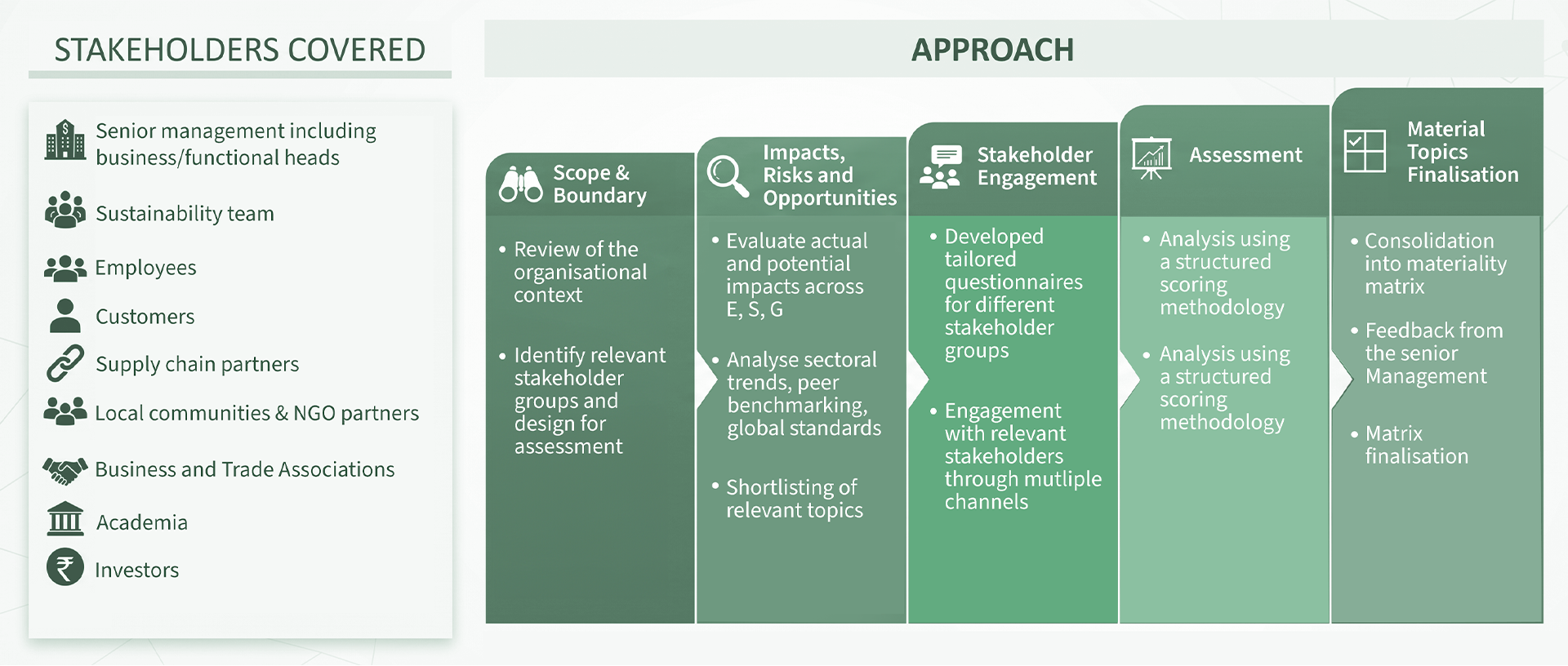
Double Materiality brings both perspectives together to determine the sustainability matters most relevant to L&T


At L&T, materiality forms the foundation of our sustainability strategy. We periodically assess and prioritise the ESG issues that are most significant to our business and stakeholders, enabling informed decision-making and long-term value creation.
Our assessment incorporates stakeholder perspectives, business priorities, emerging sustainability trends, regulatory developments, and sector-specific risks and opportunities. The outcomes guide our strategy, target setting, risk management and sustainability disclosures, helping us strengthen business resilience while creating lasting value for our stakeholders and society.
We recognise that sustainable value creation requires understanding both how sustainability issues affect our business and how our operations impact the environment, society, and the economy. Our double materiality approach integrates these two perspectives—financial materiality and impact materiality to provide a holistic view of our sustainability priorities.
Our assessment considers stakeholder expectations, business context, emerging risks, opportunities, and evolving regulatory requirements. The outcomes help shape our sustainability strategy, strengthen risk management, inform decision-making, and guide our disclosures, ensuring we create long-term value while contributing to a more resilient and sustainable future.
| Environment |
|
| Social |
|
| Governance |
|
|
Topic |
Impact Description |
Associated KPIs |
| Climate change | Energy-intensive operations contribute to GHG emissions, and business growth may increase energy demand and climate-related risks. Conversely, growing demand for renewable energy, low-carbon infrastructure and clean technologies creates opportunities to expand green business offerings, support clients' decarbonization goals and strengthen long-term competitiveness. |
|
| Air quality management | Operations rely on vehicles and diesel-powered equipment that emit nitrogen oxides, sulphur oxides, particulate matter and dust, degrading air quality and posing health risks to workers and nearby communities. |
|
| Water and waste management | Manufacturing and construction activities generate waste and consume significant water resources, making responsible management essential. Effective waste segregation, recycling, and safe disposal help minimize environmental pollution and reduce landfill impacts, while efficient water use, conservation, reuse, and wastewater management support resource stewardship and enhance operational resilience. |
|
| Land use and ecosystem | Land use changes from construction and infrastructure development can lead to deforestation, habitat loss and ecosystem degradation. These impacts affect biodiversity, soil and water quality and the well-being of surrounding communities. In sensitive coastal and marine areas, activities such as dredging can further disrupt fragile ecosystems, increasing environmental and regulatory risks. |
|